
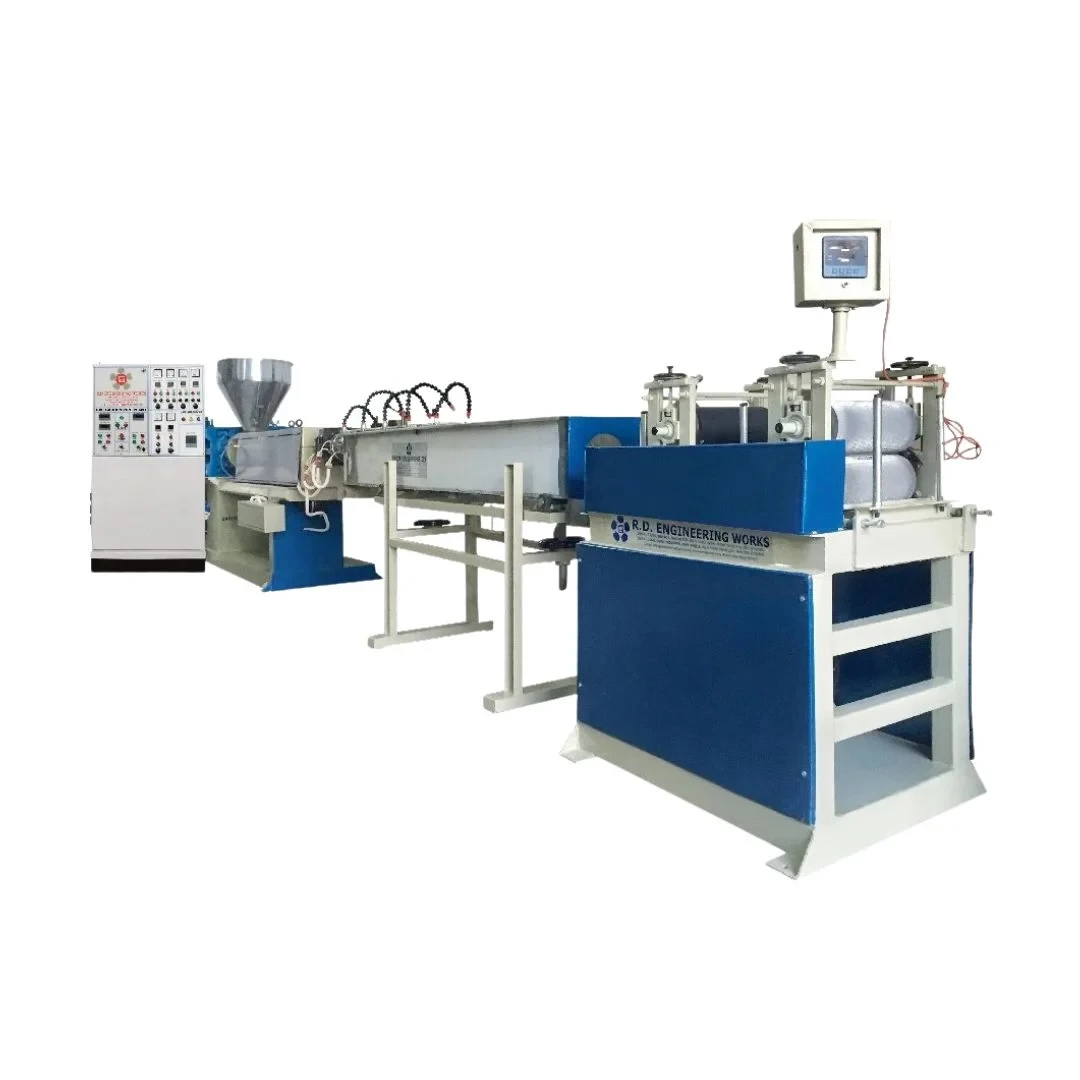
How Plastic Extrusion Machines Work
Plastic extrusion is a continuous manufacturing process used to create products like pipes, tubes, sheets, and profiles. It converts raw plastic into a fixed shape by melting and forcing it through a die.
1. Basic Working Principle
A plastic extrusion machine works by:
Heating raw plastic material
Melting it into a viscous form
Forcing it through a shaped die
Cooling it to retain the final shape
Core idea: Continuous process = continuous output.
2. Key Components of an Extrusion Machine
a) Hopper
Entry point for raw plastic (granules or powder)
Feeds material into the machine
b) Barrel & Screw
The rotating screw moves material forward
Heaters melt the plastic inside the barrel
Compression and friction help in uniform melting
c) Heater Bands
Maintain precise temperature zones
Ensure consistent melting
d) Die Head
Shapes the molten plastic into required form
Determines final product (pipe, sheet, profile)
e) Cooling System
Usually water or air-based
Solidifies the product after shaping
f) Haul-Off Unit
Pulls the product at a constant speed
Maintains dimensional accuracy
g) Cutter or Winder
Cuts into lengths (pipes) or rolls (films/sheets)
3. Step-by-Step Working Process
Step 1: Feeding
Raw plastic (PVC, HDPE, PP, etc.) is loaded into the hopper.
Step 2: Melting
Material enters the heated barrel
Screw rotation generates heat through friction
Plastic melts uniformly
Step 3: Extrusion
Molten plastic is pushed through the die
Shape is formed based on die design
Step 4: Cooling
Product enters cooling tank or air cooling system
Shape becomes rigid
Step 5: Pulling
Haul-off machine maintains speed and size accuracy
Step 6: Cutting/Finishing
Product is cut or wound depending on type
4. Types of Extrusion Machines
Single Screw Extruder – Common for simple applications
Twin Screw Extruder – Better mixing and higher output
Co-Extrusion Machines – Multi-layer products
RD Engineering Work Insight: Twin screw extruders are preferred for PVC due to better control and consistency.
5. Materials Used in Extrusion
PVC (Pipes, profiles)
HDPE (Water & gas pipes)
LDPE (Films)
PP (Packaging, sheets)
Each material requires specific temperature settings and screw design.
6. Advantages of Plastic Extrusion
Continuous high-volume production
Uniform product quality
Low material wastage
Versatile for multiple products
7. Common Applications
Pipes and tubing
Plastic sheets and films
Window and door profiles
Wire insulation
8. Key Factors for Efficient Working
Proper temperature control
High-quality raw material
Correct screw design
Skilled machine operation
Ignoring these leads to defects like uneven thickness or surface issues.
Conclusion
Plastic extrusion machines are the backbone of modern plastic manufacturing. They transform raw materials into high-demand products with speed and precision. With advanced machinery from RD Engineering Work, manufacturers can achieve consistent quality, higher efficiency, and scalable production.
In short: better machine control = better product = better business.