

Key Factors in Pipe Manufacturing Quality
Pipe quality is not determined by one element—it’s the result of tight control across materials, machinery, process, and inspection. Weakness in any one area leads to failures, rejections, or long-term reputation damage.
1. Raw Material Quality
This is the foundation. If your input is poor, output will fail—no exceptions.
Use high-grade PVC, HDPE, or CPVC resin
Maintain correct formulation (stabilizers, fillers, additives)
Avoid excessive recycled material
Ensure consistent supplier quality
Reality: Cheap raw material = brittle pipes + customer complaints.
2. Proper Formulation & Mixing
Accurate ratio of resin, stabilizers, and additives
Uniform mixing using hot & cold mixers
Controlled temperature during mixing
Improper mixing leads to weak structure, discoloration, and uneven performance.
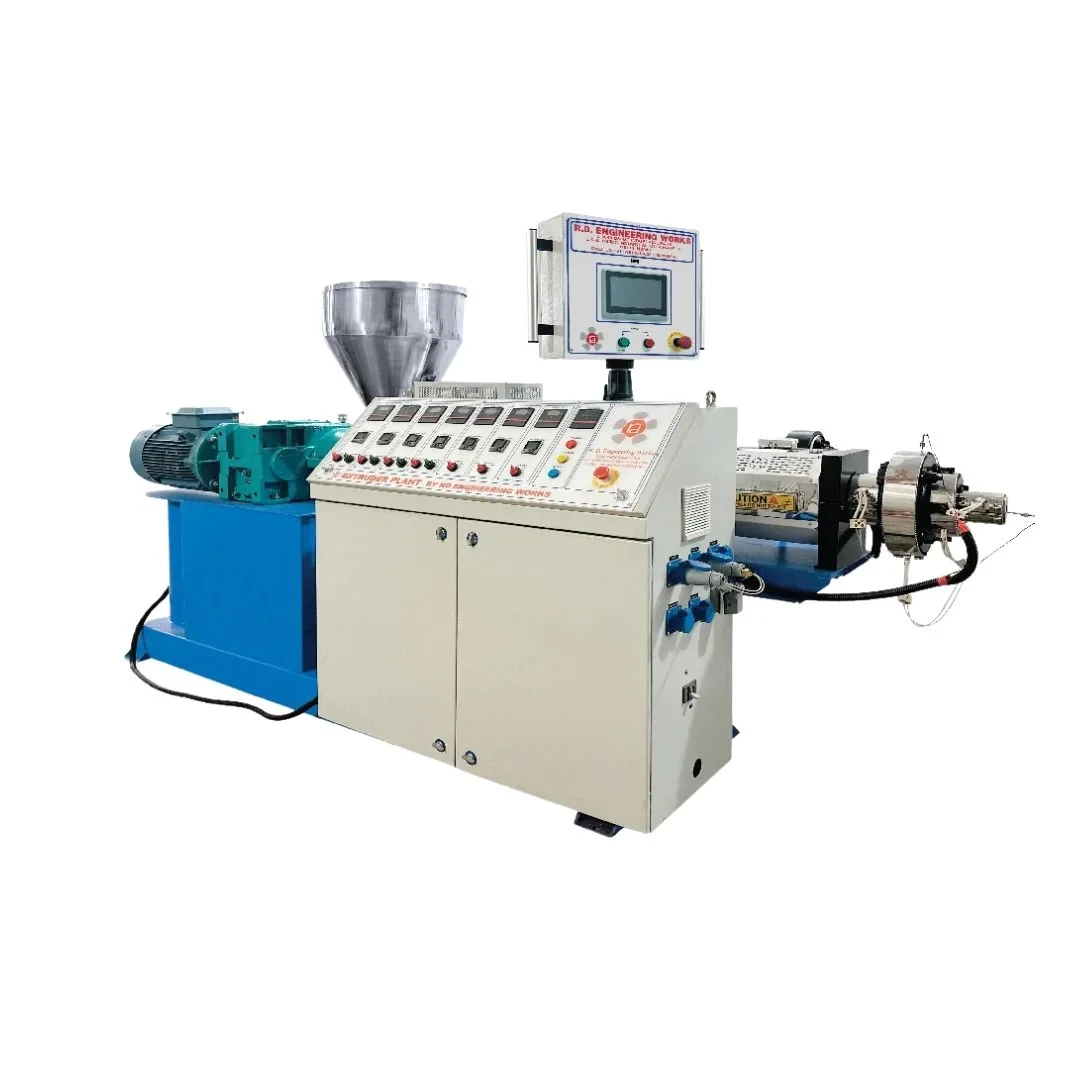
3. Machine Quality & Calibration
Precision extrusion machines ensure dimensional accuracy
Stable screw design for uniform melting
Proper die design for correct shape
RD Engineering Work Advantage: High-precision machines reduce rejection rates and ensure consistent output.
4. Temperature Control
Barrel zones must maintain exact temperatures
Overheating causes degradation
Underheating leads to poor fusion
Even small temperature fluctuations can ruin an entire production batch.
5. Die & Tooling Accuracy
Correct die design for required diameter and thickness
Regular maintenance and cleaning
Proper alignment
A poor die setup leads to oval pipes, uneven walls, and leakage risks.
6. Vacuum Calibration & Cooling
Proper vacuum pressure ensures accurate sizing
Uniform cooling prevents deformation
Consistent water temperature is critical
Bad calibration = dimensional instability.
7. Haul-Off Speed Control
Synchronization with extrusion speed
Incorrect speed causes thickness variation
Too fast = thin walls
Too slow = thick, uneven pipes
8. Wall Thickness & Diameter Consistency
Must meet industry standards (like BIS)
Continuous monitoring during production
Use measuring tools and automation
This directly affects pipe strength and pressure resistance.
9. Quality Testing & Inspection
Essential tests include:
Hydrostatic pressure test
Impact resistance test
Tensile strength test
Dimensional accuracy check
No testing = blind manufacturing.
10. Skilled Workforce
Experienced machine operators
Knowledge of process parameters
Ability to troubleshoot defects quickly
Machines don’t guarantee quality—operators do.
11. Maintenance of Machinery
Regular servicing of extruder and components
Clean dies and calibration units
Preventive maintenance schedule
Neglect leads to breakdowns and inconsistent production.
12. Environmental & Storage Conditions
Proper storage of raw materials (moisture-free)
Clean production environment
Protection of finished goods from damage
External factors can silently degrade product quality.
Conclusion
Pipe manufacturing quality is a system, not a step. The manufacturers who dominate this industry control every variable—from raw material to final inspection.
With robust machinery from RD Engineering Work, strict process control, and disciplined quality checks, you can consistently produce high-performance pipes that meet market standards and build long-term trust.
Bottom line: Quality is not optional—it’s your competitive advantage.